


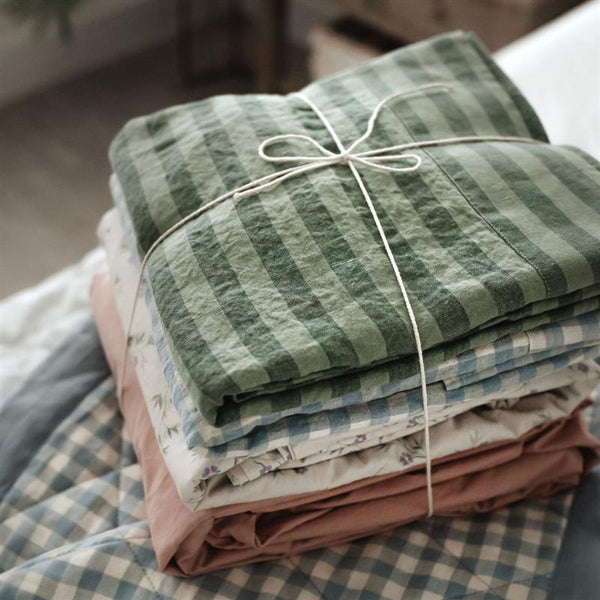





Styling a bed is truly an art form, and nothing feels more luxurious than beautifully layered bedding. While there are endless ways to dress a bed, here at Piglet, we’ve perfected our own approach for a simple yet elevated look, using different layers to drape, fold and stack for an oh-so-cosy finish.
A cohesive colour palette is also key, which is why we’ve created our bundle builder to help you find your perfect set. In just a few steps, you can mix and match your favourite hues and patterns to create your dream bedding ensemble.
From mattress toppers to sheets, to the perfect throw and plenty of pillows, here’s the Piglet guide to layering bedding...

1. Add a Valance
Starting at the very bottom, consider placing a valance around the base of your bed to add charm and character to your bedroom. Valances also conceal any under-bed storage, giving the room a more elevated appearance. Choose a fabric that complements your bedding for a cohesive style.
2. Layer with a Mattress Topper
For cloud-like comfort, place a topper over your mattress. This extra layer will add softness and support to your bed, and can help improve sleep quality. Opt for natural materials, like our Merino wool mattress topper, to help regulate your body temperature.

3. Use a Fitted Sheet
Secure a fitted sheet over your mattress and topper, ensuring it fits snugly for a smooth surface. Look for sheets with deep styles to accommodate your bedding layers and keep everything in place. Our fitted sheets have elastic all the way around, making sure they don’t budge during the night.
4. Try a Flat Sheet
Next, place a flat sheet on top of the fitted sheet, ensuring the upper side is facing down. This allows you to fold it back over the duvet later. Flat sheets are a useful extra layer between you and the duvet, meaning you can wash your duvet cover less often. They’re also perfect as a lightweight cover on warmer nights. We like to leave ours loose for a relaxed look.

5. Drape a Duvet
Add a duvet over the flat sheet, making sure it’s even on both sides. Give it a good shake for maximum fluffiness and volume before arranging it. Our Merino wool duvets and British wool duvets give a beautiful, lofty look, and they perfectly complement our natural bedding.
6. Choose a Quilt
In colder months, you could add a quilt or thick blanket on top of the duvet for an extra layer of warmth. This additional element also adds depth and texture to your bedding ensemble. Choose a cover that complements your duvet for a considered look.

7. Stack the Pillows
Start by placing larger pillows against the headboard for support and volume. Next, add your standard-sized sleeping pillows in front, followed by any decorative cushions. We like to mix sizes, colours and patterns of pillowcases to create depth and interest, and finish by arranging them at different angles to give a laid-back feel.
8. Finish with a Throw
Complete your bed by draping a blanket or throw at the foot for added texture and warmth. This provides extra cosiness and also serves as a stylish accent to your bedding combo. You can easily switch out your throw with the seasons to keep your decor fresh.


