





It’s important to caveat this Journal entry by saying, there is no right or wrong way to style a bed when you are using linen bedding! One of its most-loved assets is its natural crinkles which adds a rustic texture to your bed and, more importantly, means you don’t have to spend hours ironing and styling your bed sheets. There are however little styling tricks you can use if you are looking to make your bed look even more inviting than it already is, or perhaps recreate a certain look for your guest bedroom which may be styled more formally than your master.
Top styling tips and tricks for making your bed look like it’s straight out of your Pinterest board
1. Decide on the focal point
This potentially sounds more extravagant than it needs to be…what I mean by deciding on your focal point is simply choosing which element of your bed you want to be bestowed with *main character energy* (admittedly this sounds even more extravagant, hear me out…). You might be someone who can’t live without a four posted bed in your master, or perhaps for you it’s all about brightly-coloured bed linen, or perhaps you are someone who wants the craftsmanship and quality of material to shine through, in which case a beautifully crafted bed and good quality bedding will be the focal point. You can certainly have a few focal points going on at one time (e.g. brightly coloured bed linen AND a patterned headboard), but you will want to ensure that the two are complementing each other instead of fighting one another for the limelight.
 Credit: @charlotteclarkhome and @oldhouseontherox
2. Set the tone with a colour palette
Act as your own interior designer and ask yourself to consider the mood that you like your bedroom to be. If it’s a guest bedroom that you’re designing, again ask yourself what it is that you like to experience when you stay at someone else’s home. Digging into these questions before you tackle any of the actual designing or decorating will really help you to cement the aesthetic that you want to achieve by the end of it.
After you’ve come to a conclusion in those early stages, look for inspiration in magazines or on social media by looking up the aesthetic that you’ve settled on - even if it’s just a rough idea at this point. If you like your bedroom to be a tranquil place of calm, then natural textures, greenery and lighter shades are a great way to achieve this. Alternatively, if you prefer your bedroom to spark creativity, a brightly-coloured maximalist style may be the route you wish to go down. I should add that you don’t have to decide on every single colour at the start, but choosing a few complementary shades from which you can build on as you go will certainly help avoid finding things looking a bit out of place if you were to go about it with no vision in mind.
3. Invest in good quality bed linen
Investing in good quality sheets is not only going to improve your quality of sleep (and general everyday wellbeing, if you ask us) but also going to be key to recreating the kinds of stunning bedrooms you see in your favourite interiors magazines.
100% stonewashed linen sheets are beautifully soft to the skin, durable, hypoallergenic and thermoregulating (meaning you stay warm in the colder months and cool in hotter climates). They’re also super easy to style as we mentioned before, as they’re so lightweight that you simply need to give them a good airing before draping them over the bed: no need for any sweat-inducing tucking or ironing!
Another major asset of linen is that it’s a sustainable material to produce as it requires less water and chemicals than other fibres. This, combined with the fact that flax thread is not elastic (thus making it difficult to weave), does however make linen a more expensive option. Washed cotton percale is the closest you can get to linen in terms of breathability and relaxedness of the fibres without the expense of linen. Percale refers to the weave (a traditional criss cross pattern), while the washed element guarantees softness. Both of these aspects contribute to comfort and temperature regulation, but the quality of the cotton is also very important: high quality cotton is more important than tightly woven thread count.

4. Layer natural textures to add depth and extra cosiness!
Unless you’re living in the Mediterranean during the height of summer, layers are going to be key to making your bed extra cosy and inviting. A flat sheet turned over your duvet cover, a throw and a quilt will create that cloud-like effect that you may have experienced in a nice hotel.
A simple guide to dressing a bed like a stylist…
- Add a mattress topper to your mattress for extra comfort and support. Piglet’s mattress toppers are filled with 100% Merino wool and encased in organic cotton - both of which help to regulate temperature and aid a night of deep, restful sleep.
- Apply your fitted or flat sheet - depending on your preference. Personally, I’m all about the fitted sheet and especially love the fact that our fitted sheets are elasticated all the way around the edges instead of just the corners. This makes them easier to apply in the first place but also means they don’t come loose by the morning (as other types of fitted sheets often do). If you have some unsightly storage under your bed, a flat sheet that is much larger than your actual bed size can be a great way to hide this.
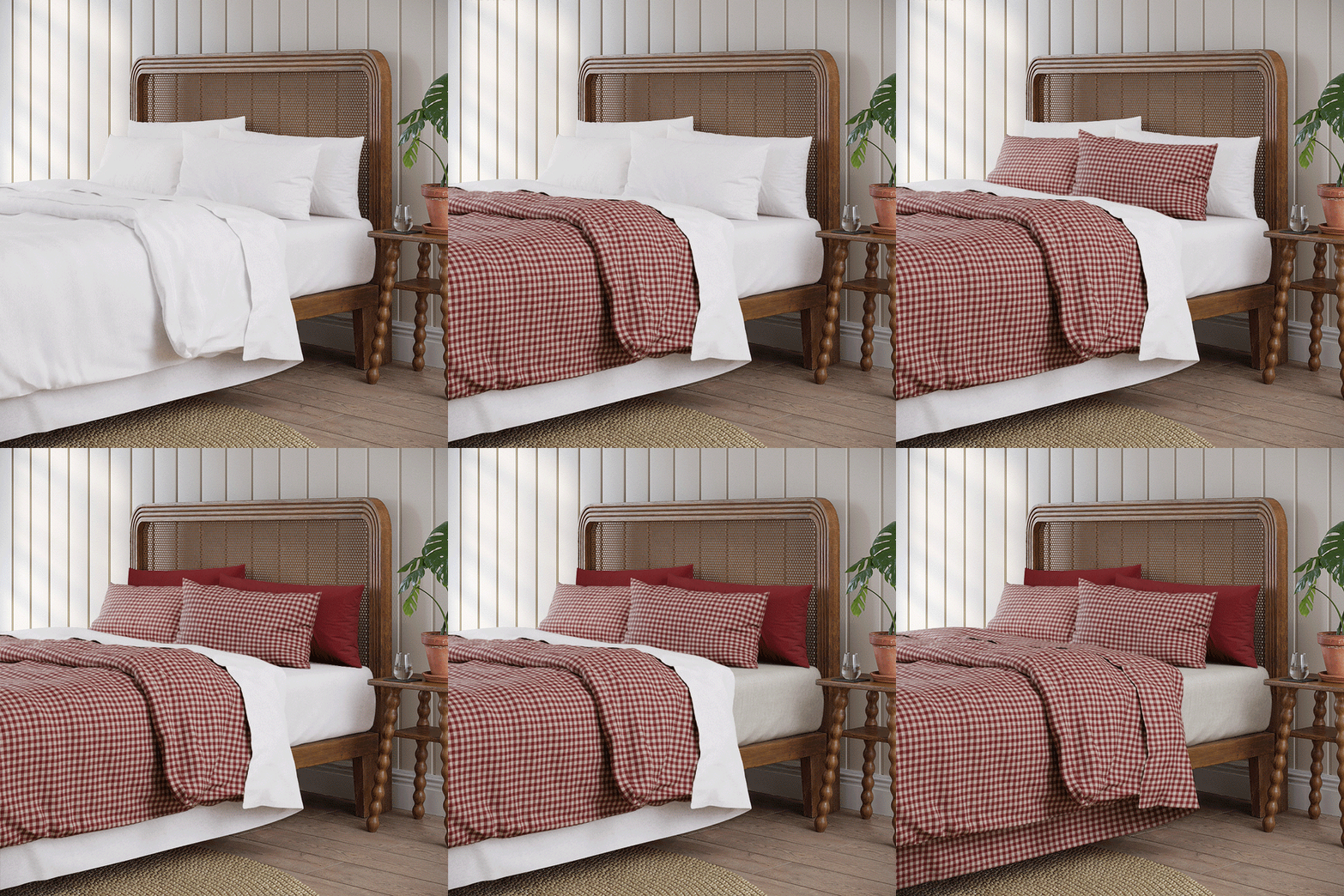
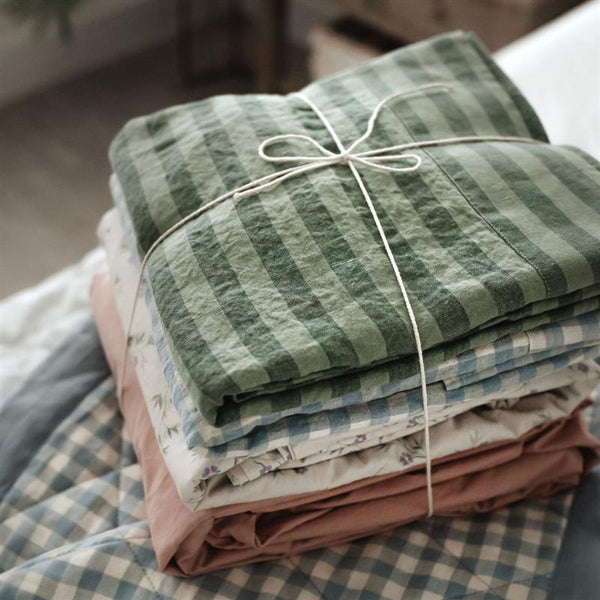
- For an extra luxurious and layered look, lay a flat sheet first before adding your duvet. Fold back the flat sheet over the duvet at the top - this looks extra nice if you use a different colour flat sheet to duvet cover, whether you decide to use a white flat sheet and coloured duvet for a more minimal aesthetic, or to get creative with some complementary colourways. Our Mix & Match Bundle option gives you the choice to create a bedding set out of our 15 stonewashed colours, meaning you can create a look that’s unique to you.
- Stack two pairs of pillows on top of the sheets. Our organic and hypoallergenic Merino wool pillows are available in three different styles depending on how firm or soft you like your pillows to be. You might want to choose two white pillowcases to go on the bottom, or again, you could create a complementary colour palette to match the flat sheet and duvet cover you chose. Make sure to give them a good airing so they become nice and fluffy!
- Drape a linen throw over the end of your freshly made bed. You can choose to either fold this neatly in half to create a hotel-style look, or if you prefer the more natural and rustic aesthetic, embrace linen’s crinkles and simply toss the throw over one corner of the bed.
- Last but not least, if you are someone who likes cushions on the bed, layer a mixture of sizes in front of the pillows - you might choose large square cushions to start with, followed by some smaller scatter cushions in front. Here’s your chance to get creative with colour and pattern if you prefer the maximalist interior aesthetic. Some people, on the other hand, prefer to simply place two cushions in a neutral shade to add a bit of texture, without having to embark on a workout each evening as you remove them!